
Tea basics
How Should You Read Tea Tasting Notes?
Tea tasting notes describe perceived aromas and flavors, such as citrus, malt, flowers, or toasted grain. They are comparisons, not necessarily added ingredients.
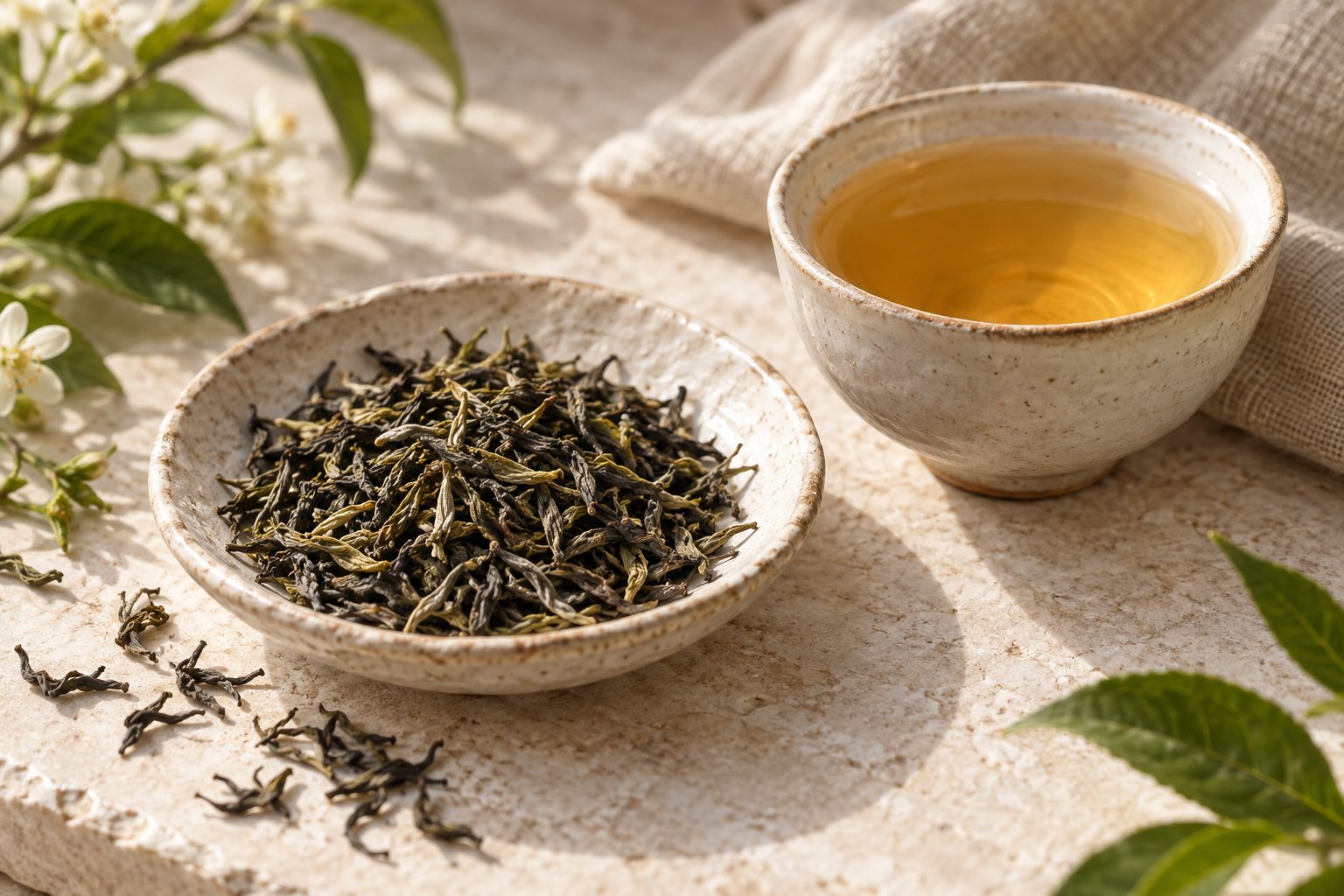
Flavor note or ingredient?
A plain tea may be described as honey-like even when it contains no honey. That note comes from the tea’s natural aroma and the taster’s comparison. A flavored blend is different: it may contain botanicals, flavorings, or both. Check the ingredient list if you need to know what is actually in the cup.
People do not all perceive the same notes. Water, steeping, food eaten beforehand, and individual sensitivity can shift what you notice. Tasting notes are an invitation to explore, not a test you can fail.
A practical way to taste
Smell the dry leaf, then the warm infusion. Take one sip while it is hot and another after it cools a little. Notice sweetness, briskness, body, and finish before hunting for a particular fruit or flower.
If you are comparing two teas, use the same cup size and water. Write down your own three words before reading the maker’s description again. That keeps your preference at the center.